Latest from Middle East crisis: Israeli missiles strike oil depots in Iran
· Toronto Sun
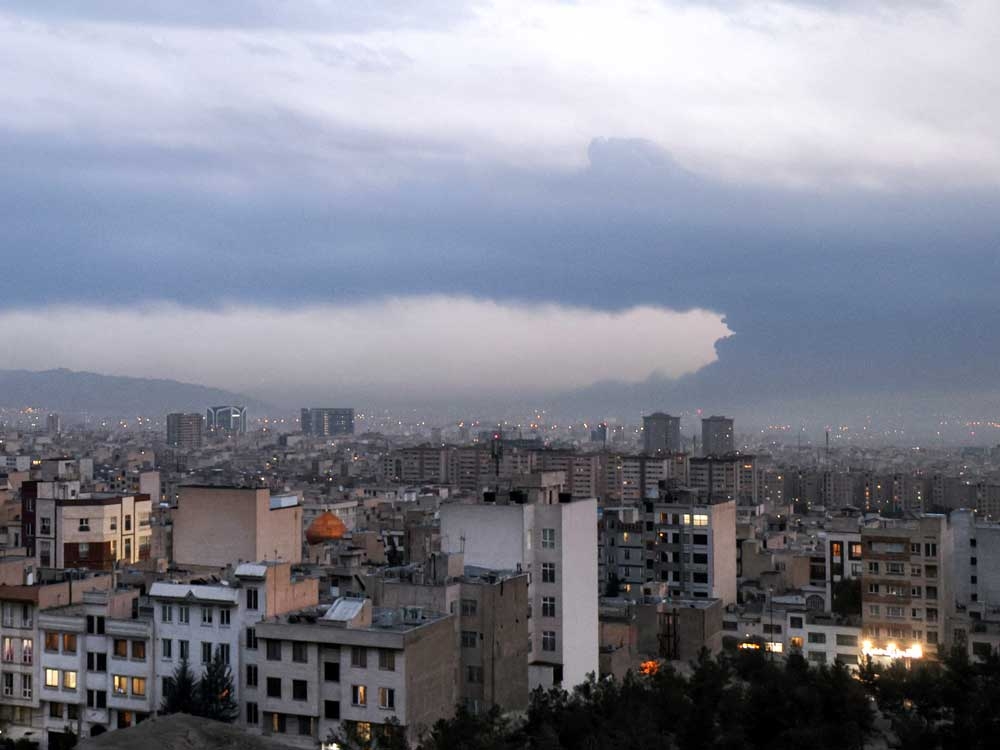
The war in the Middle East spread to the region’s vital infrastructure on Sunday as Israeli airstrikes hit oil storage facilities in Tehran overnight, while Iran also hit a desalination plant in Bahrain.
Visit albergomalica.it for more information.
Several media outlets reported that thick black smoke was hanging over Tehran, blocking out the sun, following the overnight attack.
The Israel Defence Forces confirmed that its air force had struck “fuel storage facilities in Tehran” to prevent their use by the Iranian government’s military.
Iran’s Foreign Ministry spokesperson Esmaeil Baghaei said in a post on X that the large-scale aerial bombardment, which targeted five oil depots in Tehran, marked a “dangerous new phase” of the conflict and amounted to a “war crime.”
The U.S.-Israeli criminal war against the Iranian nation has entered a dangerous new phase with deliberate strikes on Iran's energy infrastructure. These attacks on fuel storage facilities amount to nothing less than intentional chemical warfare against the Iranian citizens
— Esmaeil Baqaei (@IRIMFA_SPOX) March 8, 2026
By… pic.twitter.com/Ar9P815aU2
The CEO of the National Iranian Oil Products Distribution Company Keramat Veyskarami told state TV that two of its tanker truck drivers were among the four killed in the strikes.
It appeared to be the first time a civil industrial facility had been targeted in the war.
The Israeli military said on Sunday it had struck more than 3,400 targets in Iran and more then 600 in Lebanon since the war began last week.
Drone strike hits desalination plant in Bahrain
Hours after the attack, an Iranian drone strike hit a desalination plant in Bahrain, causing material damage, according to authorities.
Iran’s Foreign Minister Abbas Araghchi said a U.S. airstrike had damaged an Iranian desalination plant on Qeshm Island, warning that in doing so “the U.S. set this precedent, not Iran.”
Desalination plants are part of the critical infrastructure in Gulf states, as the facilities supply drinking water across the desert region.
The Pentagon had not commented publicly on the claim, though U.S. President Donald Trump has told reporters he was unaware of a strike on a desalination plant in Iran.
RECOMMENDED VIDEO
Iran’s president threatens to step up attacks on U.S. targets
As the U.S. and Israel pressed ahead with their air campaign, Iran’s president threatened to step up attacks on American targets throughout the Middle East in a video released by state media.
“When we are attacked, we have no choice but to respond. The more pressure they impose on us, the stronger our response will naturally be,” Iran’s President Masoud Pezeshkian said. “Our Iran, our country, will not bow easily in the face of bullying, oppression or aggression — and it never has.”
Pezeshkian appeared to be backtracking from conciliatory comments he made toward his Gulf neighbours on Saturday, in which he appeared to apologize for attacks on their soil, that were quickly contradicted by Iranian hardliners.
Two IDF soldiers killed in Lebanon
The Israeli military said that two of its soldiers were killed in southern Lebanon early Sunday, marking its first fatalities since hostilities between Israel and Lebanon resumed last week .
The IDF said the soldiers were killed during an ambush by Hezbollah near an army post across from the Israeli border community of Manara.
Israel had issued evacuation orders for south Lebanon, stretching to about 27 km into the country, and has said its objective is to disarm Hezbollah.
Arab League officials slam Iran
Arab foreign ministers said they strongly condemn Iran’s attacks on its Arab neighbours and called for Iran to immediately stop its attacks and cease “provocative acts or threats to neighbouring countries.”
Foreign ministers of the Arab League, who had gathered for an emergency virtual meeting on Sunday, also urged the UN Security Council to condemn Iran and force it to “immediately and unconditionally halt its attacks” on Arab countries.
Iran has said it was targeting U.S. assets in Arab countries in response to U.S. and Israeli strikes that triggered the war on Feb. 28. However, Iranian attacks have hit civilian facilities and disrupted life across the Gulf states.
The ministers also voiced support to Lebanese government in its efforts to disarm Hezbollah and urged the international community to pressure Israel to immediately cease its attacks on Lebanon.
The communique didn’t mention U.S. and Israeli strikes, which triggered the war.
— With files from the Associated Press.