U2’s ‘Songs of Ash’ is exceptional protest music
· Citizen
It takes a couple of weeks to listen to an album properly. Unlike bubble gum music, rock records and even EPs, in this case, comprise a body of work.
Visit casino-promo.biz for more information.
It’s not just tracks that are intended to last as long as the flavour does in a square of chew. The new U2, Songs of Ash, is not music click bait. It’s a modern classic, to use the cliché.
The EP is also the forerunner of an album due for release later this year, but frontman Bono said that the released tracks could not wait to get out. It’s a collection of protest music that’s lyrically tough on injustice, hyper-critical with geopolitical concern and musically some of the best material that the band has ever made.
Some critics liken it to The Joshua Tree, but, frankly, Songs of Ash is more like an evolution and while comparisons are odious, thematically 1983’s War springs to mind. The message is that powerful.
In an interview in Propaganda, the long running U2 fan publication, Bono said that “… the songs being presented here are all reactions to present day anxieties… some knee-jerk… some more considered… all likely to offend or annoy some parties, but that’s kind of our job!”
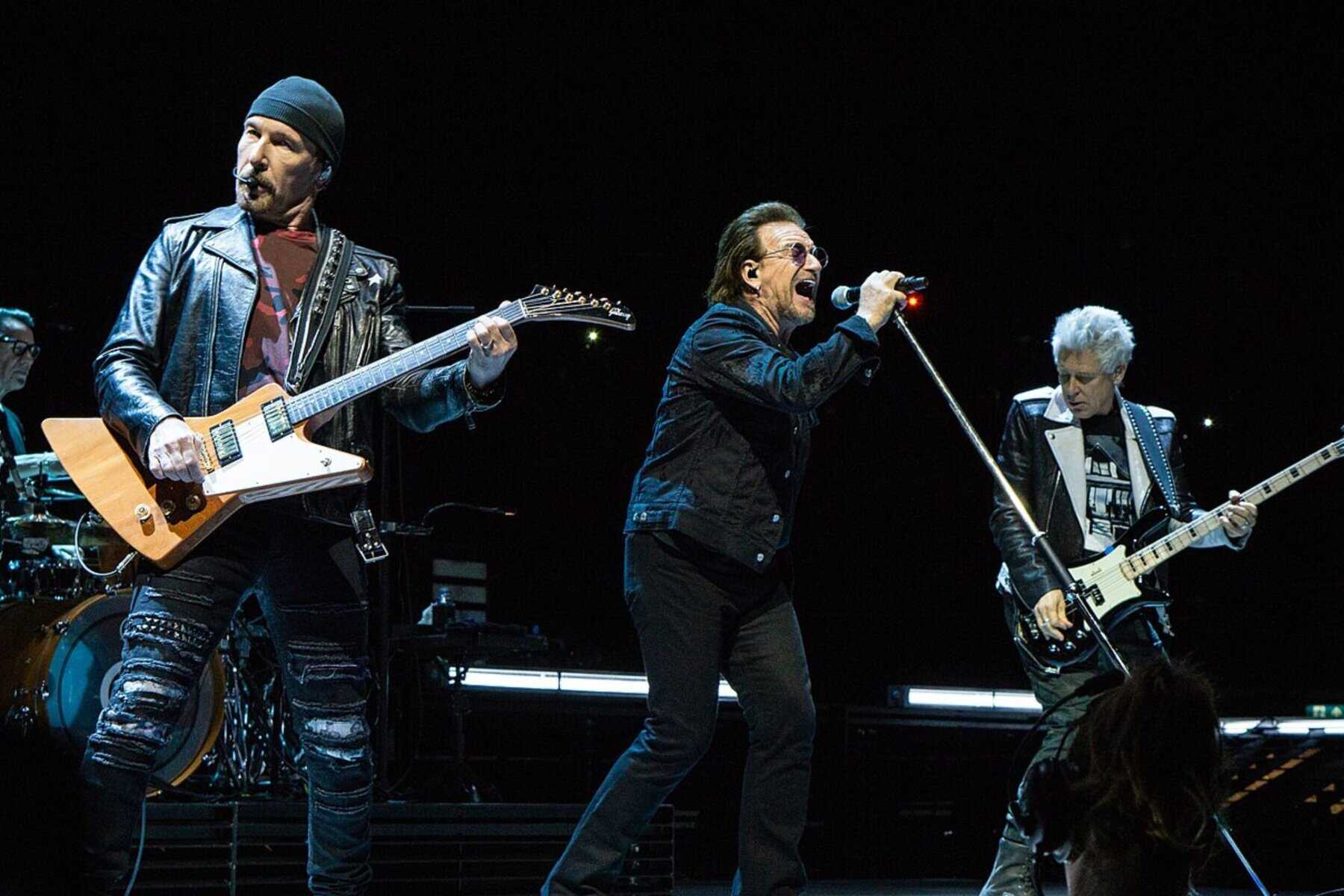
Rock and roll can change the world. U2. Picture Anton Corbijn/Supplied‘Reaction to present day anxieties’
“It’s also part of U2’s job to describe the world around us… what you might call our exterior life as well as the interior one that I – we – have been documenting on more recent projects,” he said, and that the songs “are less Fat Tuesday and more Ash Wednesday”.
He said the forthcoming album’s mood will be far more joyful but at the same time Bono said there was a sense of urgency getting the music out.
“They are songs of defiance and dismay, of lamentation. Songs of celebration will follow, we’re working on those now… because for all the awfulness we see normalised daily on our small screens, there’s nothing normal about these mad and maddening times and we need to stand up to them before we can go back to having faith in the future. And each other. ‘If you have a chance to hope it’s a duty…’ is a line we borrowed from Lea Ypi.”
Listen to The Tears of Things
It’s been almost a decade since the band released anything original. Usually, there’s a two to four year gap between works, but the band has been busy.
Bono’s biography, the Broadway acclaimed play that followed, the movie made of the performance, his solo tour, a residency at The Sphere in Las Vegas, solo projects, the stripped down releases of Songs of Innocence and Experience on Songs of Surrender and, well, a whole lot more. Like the Stones, Bono, The Edge, Larry Mullen Jr and Adam Clayton never twiddle their musical thumbs.
The band has been busy
Bono said that it was great being back as a band in the studio and drummer Larry Mullen Jr returned, too, following an injury.
The six tracks smash, bitch slap and protest the state of the world. The final track on the album, Yours Eternally, was inspired by a letter from the frontline in the Ukraine war. Bono said in Propaganda: “Ask anyone in East Germany or Poland or Latvia if they think Putin will stop at Ukraine if he can get away with it? He’d find an excuse to invade Ireland if it suited his purposes.” Needless to say, the track is an angry lament against the war.
American Obituary, the opening track, explores the outrage and sadness after the killing of Rene Good by US ICE officers in January this year. The Tears of Things is a ballad in proper U2 tradition, a lament about compassion and kindness during violent times.
The teenage Iranian protestor Sarina Esmailzadeh is celebrated in Song of the Future while the band collaborated with Nigerian artist Adeola Fayehun on Wildpeace where he reads a poem by Israeli poet Yahuda Amichai.
Songs of Ash is an exceptional work. Picture SuppliedYours Eternally is an exceptional track and a collaboration with Ed Sheeran. The track tells human stories of protest including of figures like Palestinian activist Awdah Hathaleen. In Propaganda, Bono shared how Sheeran became involved and said that their collaboration grew out of time spent together in Dublin, where they discovered a shared creative energy.
“He’s even more impatient in the studio than me,” Bono said, recalling how Sheeran would push for lyrics and momentum during late-night sessions. Bono said that he idea for Sheeran to feature on the tune was organic, with Bono asking him to voice the reply to the song’s letter-like narrative.
Sheeran agreed, but with some hesitation: “I love the song, I love Ukraine but I’d rather not be part of any political polemic right now,” he said. “You’re not,” Bono shared that he reassured him, before conceding, “I might have been bluffing there.”