OPINION: Carney government doubling down on Trudeau’s failed fiscal policy
· Toronto Sun
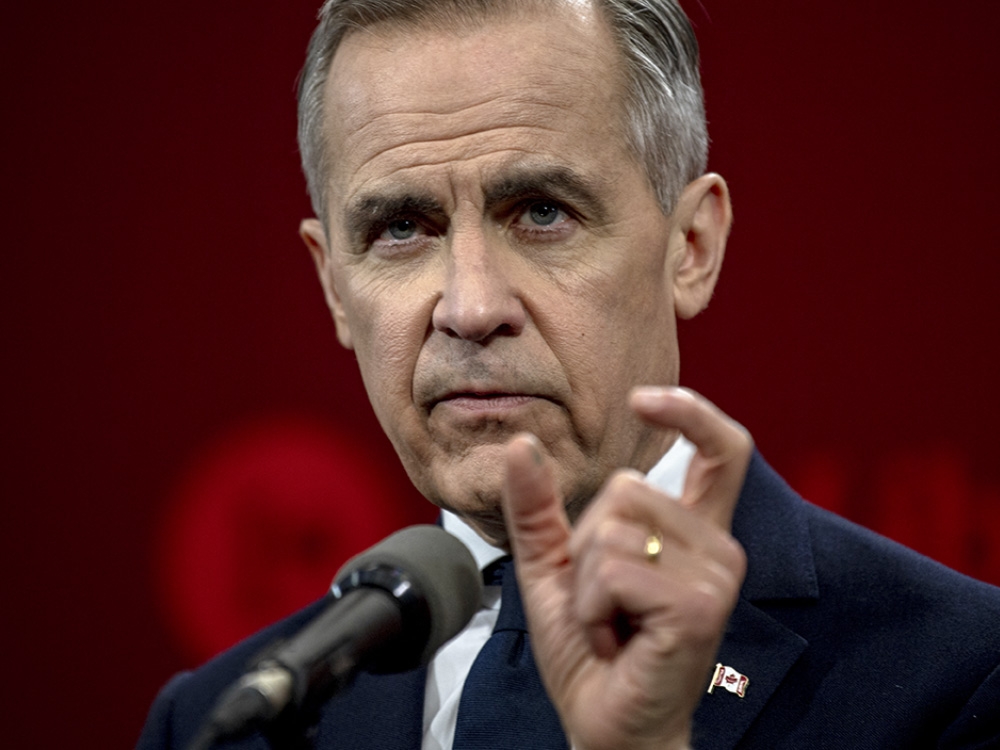
In the coming weeks, the government of Prime Minister Mark Carney is expected to update Canadians on the state of federal finances.
Visit syntagm.co.za for more information.
It should be an interesting update.
During the election last April, in an attempt to distance itself from former prime minister Justin Trudeau’s government, the Carney campaign promised a “very different approach” to federal finances to improve Canada’s economy. Based on the experiences of past federal governments, this approach should include spending restraint, balanced budgets and debt reduction.
Unfortunately for Canadians, the Carney government is doubling down on the Trudeau government’s failed approach.
Trudeau’s legacy as prime minister is one of historically poor fiscal management. During his tenure, the federal government recorded the highest spending levels on record, which resulted in nine consecutive deficits and the highest levels of debt accumulation on record (after accounting for population changes and inflation).
Moreover, compared to the Stephen Harper and Jean Chrétien governments, the Trudeau government presided over the weakest economic performance across a variety of measures, including growth in per-person gross domestic product or GDP (a broad measure of individual living standards), private-sector job creation and per-worker business investment (which helps workers become more productive and earn higher incomes).
Conversely, the Chrétien government reduced spending, consistently balanced the budget and reduced government debt, which corresponded with the strongest economic performance of the three governments.
Carney government should reject Trudeau’s fiscal policies
Based on this evidence, to deliver on its promise of a strong economy, the Carney government should reject the fiscal policies of Trudeau and instead emulate Chrétien’s approach. But as noted in our new study, that’s not happening.
For example, according to the Carney government’s first budget released in November, from fiscal years 2025-2026 to 2029-2030, the Carney government plans to spend $67.6 billion more than the Trudeau government planned for the same five-year period in its last fiscal update.
Combined with slower projected revenue growth, the Carney government’s higher planned spending will produce combined deficits of $321.7 billion over the five years – more than double what the Trudeau government had planned ($154.5 billion).
Consequently, the Carney government projects total federal debt will reach $2.9 trillion by 2029-2030 compared to $2.6 trillion under the Trudeau plan. Clearly, the Carney government plans to spend more, run larger deficits, and accumulate more debt than even the Trudeau government had planned.
RECOMMENDED VIDEO
And in the months since releasing its first budget, the Carney government has only further doubled down.
For example, the government recently introduced a new “affordability” package centred around a five-year, 25% increase to the quarterly federal GST payment for eligible Canadians, along with a one-time additional GST payment equal to 50% of the normal payment. This poorly targeted package, which will send cash to many individuals who don’t need it, follows the same “affordability” strategy as the Trudeau government. And it comes with an estimated price tag of $12.4 billion.
After a decade of fiscal mismanagement and economic stagnation under the Trudeau government, the Carney government must change course if it wants different results. But so far, it’s delivered much of the same – higher spending, more borrowing and more debt.
The government’s upcoming fiscal update would be a good place to start moving in a new direction.
– Grady Munro is a senior analyst and Jake Fuss is the director of fiscal studies at the Fraser Institute